Gantry Crane Selection
How to Choose a Gantry Crane: Capacity, Span, Height, and Duty
Choosing a gantry crane requires more than naming a lifting capacity. Buyers must define the complete suspended load, rail or wheel geometry, usable lifting height, operating duty, outdoor conditions, ground or runway interface, controls, installation access, and project scope before comparing quotations.
Reading time: 20 minutes
Audience: Procurement & Project Teams
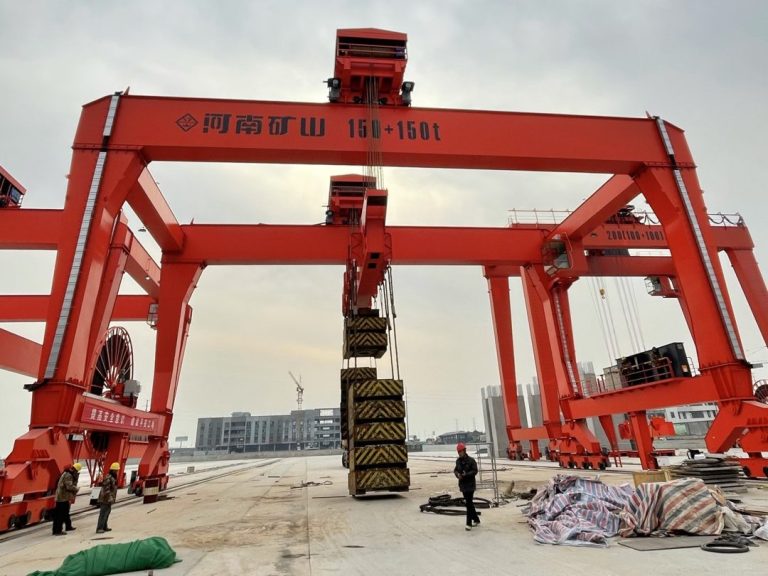
A gantry crane is a complete material-handling system supported by legs that transfer crane loads to rails, wheels, foundations, or another engineered travel surface. Two cranes with the same rated capacity can have different spans, lifting heights, cantilevers, wheel loads, wind areas, duty classifications, hoists, control systems, maintenance provisions, and installation costs.
This guide explains the four primary buyer decisions—capacity, span, height, and duty—and the additional site and commercial information required for a technically comparable quotation. It applies to new yards, workshops, warehouses, precast plants, steel stockyards, construction projects, maintenance facilities, logistics areas, infrastructure works, and other applications involving industrial gantry cranes.
| Capacity | Define the maximum process load plus attachment and rigging weight, load dimensions, center of gravity, and all exceptional lift cases. |
| Span | Define the distance between travel rails or wheel paths, required hook coverage, leg clear opening, cantilevers, travel length, and obstructions. |
| Height | Define the highest and lowest hook positions, load and attachment depth, clearance above the load, rail elevation, crane height, and site restrictions. |
| Duty | Provide operating hours, lifts per hour, load spectrum, travel per cycle, expected life, production growth, and acceptable downtime. |
Choose a gantry crane by defining the complete suspended load, required horizontal coverage, lowest and highest hook positions, actual operating cycle, load spectrum, travel surface, wind and weather conditions, control method, lifting attachment, safety basis, installation access, and supply boundary. Ask the manufacturer to justify the proposed crane type and state all classifications, dimensions, wheel loads, assumptions, exclusions, and deviations.
Why Capacity, Span, Height, and Duty Must Be Evaluated Together
The four headline parameters interact. Increasing capacity may increase trolley weight, girder size, wheel loads, motor power, and foundation demand. Increasing span normally affects girder depth, stiffness, crane self-weight, wind area, shipping segmentation, and erection planning. Increasing lifting height can affect reeving, rope capacity, drum size, hoisting power, total crane height, and wind exposure. Increasing duty changes fatigue design and mechanism thermal ratings.
A change in one parameter can therefore alter the others and change the total project cost. Buyers should freeze the material-flow requirement and site constraints before selecting a configuration or comparing prices.
1. Start with the Application and Material Flow
Describe what the crane will lift, where the load begins and ends, how it travels through the site, and why a gantry arrangement is preferred. A full gantry crane may be appropriate where both sides can travel on ground-supported rails. A semi-gantry crane can use one elevated runway and one ground-level rail. A mobile or portable gantry serves a different use case and should not be treated as a substitute for a permanently engineered production crane.
Identify whether the crane serves general yard handling, precast elements, steel products, equipment assembly, maintenance, bulk material, containers, infrastructure construction, shipbuilding, hydropower, or another specialized process. State whether it operates indoors, outdoors, between buildings, across a road, over stored materials, or inside an active production area.
Material-flow questions
- What are the exact pick-up, travel, and set-down locations?
- What equipment, buildings, roads, stacks, utilities, or personnel are below the load path?
- Must trucks, railcars, containers, or large components pass between the legs?
- Is load rotation, turning, tilting, or tandem lifting required?
- Will another crane, vehicle, or process share the operating zone?
Provide a dimensioned site plan and elevation showing travel paths, rails or wheel paths, load zones, buildings, obstructions, utilities, roads, drainage, and required clearances.
2. Define Rated Capacity from the Complete Suspended Load
Begin with the heaviest process load, then include everything permanently or temporarily suspended from the hook. Lifting beams, spreaders, magnets, grabs, coil tongs, container spreaders, rotators, vacuum lifters, and rigging all consume rated capacity.
Also provide load dimensions, center of gravity, lifting points, temperature, stability, orientation, and normal weight range. Identify exceptional cases such as tandem lifts, synchronized hoists, load turning, accidental snagging risk, off-center picks, wind acting on large loads, or a future capacity increase.
Do not add an unexplained percentage as a safety margin. Unnecessary oversizing increases crane self-weight, wheel loads, rail and foundation demand, power, shipping, erection difficulty, and price. Provide the real load cases and require the manufacturer to apply the governing design factors.

Rated capacity, attachment allowance, main and auxiliary hoist capacities, simultaneous-use restrictions, hook type, reeving, overload-setting basis, and every assumption used to interpret the load data.
3. Define Span, Travel Length, Leg Opening, and Hook Coverage
Gantry crane span is normally the transverse distance between the centers of the travel rails or designed wheel paths. It is not automatically the same as the clear distance between the legs, the width of the storage yard, or the required hook coverage.
The useful working area is reduced by trolley approach, end-carriage geometry, leg shape, buffers, maintenance clearances, end stops, and obstructions. If the crane has one or two cantilevers, define the required cantilever hook coverage separately. A longer cantilever affects structural design, stability, wind behavior, wheel loads, and sometimes erection method.
Dimensions buyers must distinguish
- Crane span: distance between travel-rail or wheel-path centerlines
- Travel length: longitudinal crane movement along the yard or building
- Clear leg opening: usable width for loads, trucks, equipment, or railcars between the legs
- Cantilever length: structural overhang beyond a support leg
- Hook coverage: actual transverse and longitudinal area reachable by the hook
- Approach: closest hook position to a leg, rail end, building, or obstruction
Do not increase span simply to create more clearance without checking the cost of girder weight, wheel loads, wind area, foundations, shipping, and erection. Sometimes a different leg geometry, cantilever, load path, or site layout provides better total project value.
4. Calculate Lifting Height and the Complete Vertical Envelope
Lifting height is the vertical hook travel between the lowest required pick position and the highest required set-down or clearance position. It is not simply the height of the load or the distance from ground to the main girder.
Lowest hook position → load and rigging height → required obstacle clearance → highest hook position → hoist headroom → girder and trolley envelope → total crane height.
Include pits, trenches, truck decks, railcars, foundations, platforms, stack height, load height, attachment depth, rigging length, and clearance above obstacles. If the hook must lower below rail level, define the depth below rail. If the crane works beneath power lines, roofs, conveyors, bridges, or other equipment, provide the lowest obstruction and required electrical or operating clearance.
Excessive height increases leg length, structural demand, wind area, stability requirements, access height, erection difficulty, and sometimes foundation cost. Insufficient height prevents the crane from clearing the load or achieving the required hook position. Freeze the vertical envelope from a section drawing before approving the gantry arrangement.
Supplier drawing requirements
- Lowest and highest hook elevations
- Lift above and below rail or wheel-path level
- Hook approach at each leg and cantilever end
- Clear opening beneath the girder and between the legs
- Top of crane, maintenance platform, cab, and access elevations
- Required operating and maintenance clearances
5. Match Duty Classification to Real Operating Data
Rated capacity tells the manufacturer the maximum suspended load. Duty data tells the manufacturer how frequently and intensively the crane and each mechanism will work. A maintenance gantry lifting its rated load occasionally is not equivalent to a production gantry moving loads continuously across multiple shifts.
Provide actual operating hours, lifts per hour, load spectrum, average travel distances, simultaneous motions, design-life target, seasonal peaks, future production growth, and acceptable downtime. Do not select a class from a short marketing description or assume ISO, FEM, CMAA, and other classification systems convert directly.
| Duty Input | What the Buyer Should Provide | Design Impact |
|---|---|---|
| Operating time | Shifts, hours per shift, days per year, seasonal peaks | Motor thermal rating, mechanism life, inspection planning |
| Load spectrum | Percentage of cycles in defined weight ranges | Structural fatigue and mechanism classification |
| Cycles | Average and peak lifts per hour | Brakes, gears, wheels, bearings, and controls |
| Travel per cycle | Average hoist, trolley, and gantry travel distances | Mechanism utilization, energy, and component wear |
| Criticality | Downtime tolerance and recovery requirement | Redundancy, access, monitoring, spares, and service strategy |
Under-specifying duty can shorten component life and increase downtime. Automatically selecting the highest class can add unnecessary cost. Provide real operating data and require the bidder to state and justify the crane and mechanism classifications.
6. Select the Gantry Crane Configuration
Configuration should follow the load, span, lift, duty, site geometry, travel surface, wind, attachment, maintenance needs, and total installed cost. It should not be selected from rated capacity alone.
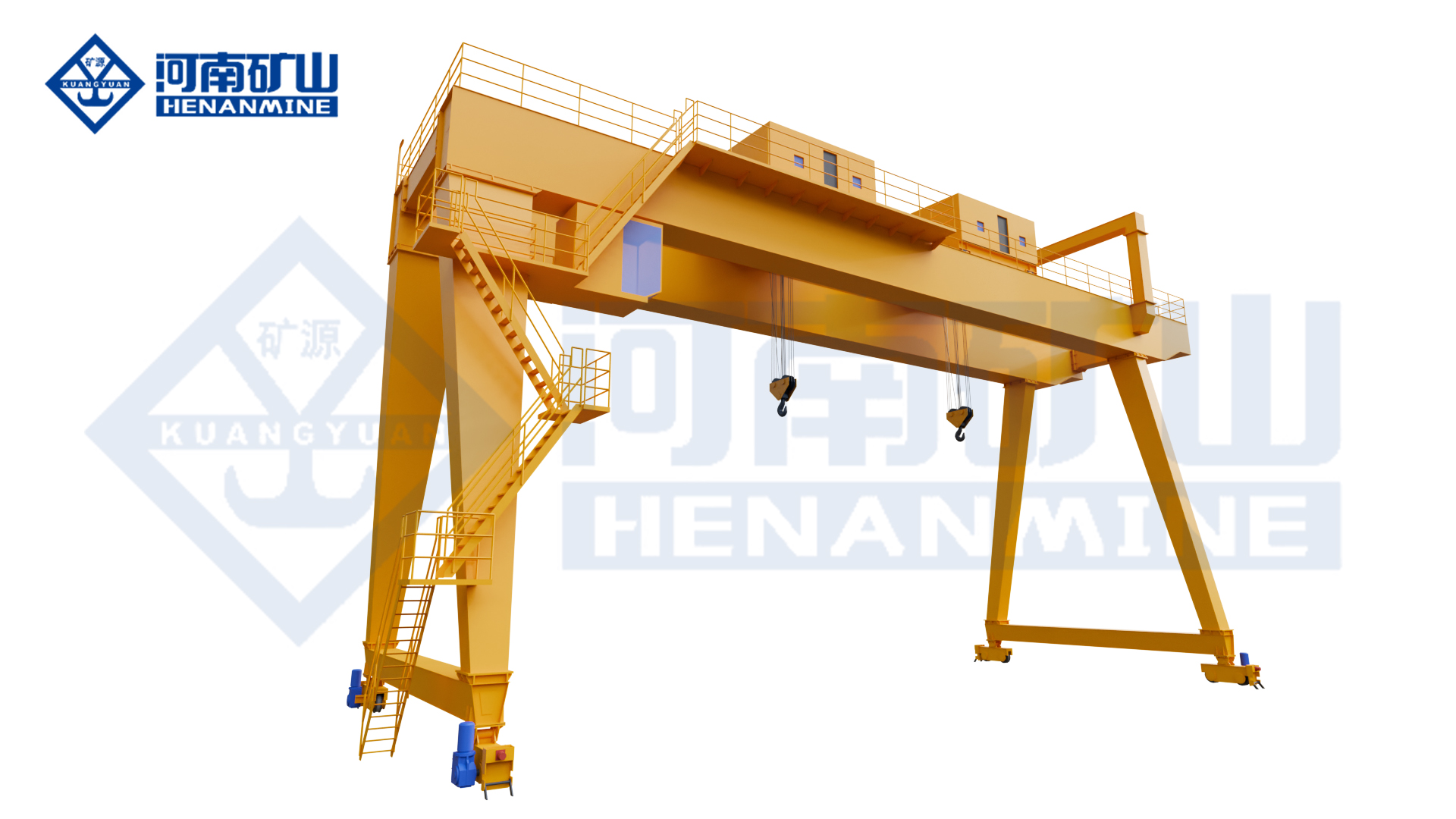
A single-girder gantry crane can be efficient for many general-purpose applications within an appropriate design range. A double-girder gantry crane is often considered for higher capacity, longer span, severe duty, top-running trolleys, auxiliary hoists, improved hook height, walkways, or specialized attachments.
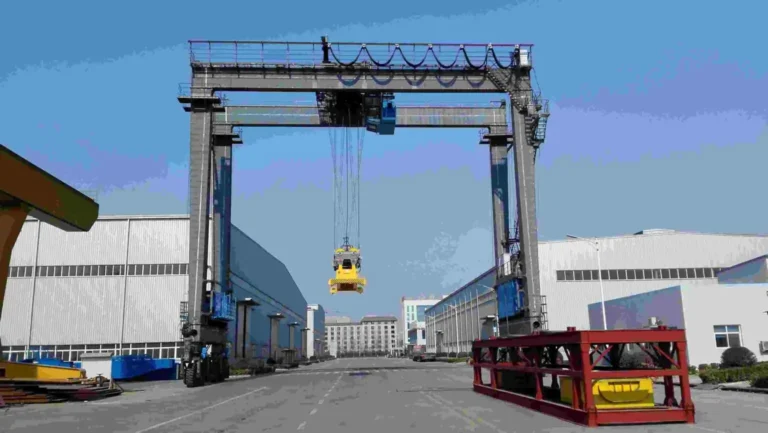
A full gantry uses two ground-supported leg systems. A semi-gantry combines a ground-level travel side with an elevated building or freestanding runway. U-shaped legs may improve clearance for large loads or vehicles. Truss construction can reduce wind area and self-weight in suitable applications, while box girders may provide other fabrication, stiffness, maintenance, and environmental advantages.
Why the selected girder, leg, trolley, hoist, cantilever, travel mechanism, control station, and maintenance-access arrangement is appropriate for the verified application and site.
7. Verify the Runway, Ground, Foundations, and Wheel Loads
A rail-mounted gantry transfers vertical, lateral, longitudinal, dynamic, wind, braking, skewing, and exceptional forces into the rails and foundations. The crane manufacturer must provide governing reactions; the responsible civil and structural engineers must design or verify the rails, beams, foundations, anchors, drainage, and surrounding ground.
For a rubber-tired or other wheel-mounted arrangement, define pavement strength, flatness, slope, turning route, tire loads, drainage, traction, travel control, and operating restrictions. Ground bearing pressure alone is not enough; local wheel loads, repeated cycles, settlement, surface deterioration, and water must be considered.
Structural information required from the supplier
- Maximum and minimum wheel loads for governing crane and trolley positions
- Horizontal reactions from travel, braking, skewing, wind, and other design cases
- Wheel spacing, wheelbase, number of wheels, and crane self-weight
- Rail size, wheel diameter, allowable rail tolerances, and end-stop forces
- Storm-anchor, rail-clamp, tie-down, or wheel-chock reactions
- Drainage, cable-trench, conductor, grounding, and access requirements
Coordinate crane and civil design early. A lower equipment price can be offset by greater foundation quantities, heavier rails, restricted drainage, difficult power routing, or extensive site modification.
8. Define Wind, Weather, Temperature, and Corrosion
Outdoor gantry cranes require separate operating and out-of-service environmental cases. Provide site-specific wind data, temperature range, humidity, rainfall, snow or ice where applicable, altitude, lightning exposure, dust, salt, chemicals, flooding risk, and corrosive atmosphere. Do not rely only on a regional wind speed without confirming the governing local design basis.
The quotation should identify the permitted operating-wind limit, wind-monitoring method, alarm and shutdown logic, and out-of-service securing system. Depending on the design, this may include rail clamps, storm brakes, anchors, tie-downs, wheel chocks, or other engineered devices. The storage position and responsibility for engaging the system must be defined.

Environmental provisions to compare
- Paint system, surface preparation, coating thickness, and color
- Motor, brake, control-panel, and limit-switch enclosure protection
- Heaters, ventilation, cooling, sunshades, and condensation control
- Low-temperature materials, lubricants, cables, and derating
- Drainage, platform slip resistance, lighting, and visibility
- Anemometer, warning devices, and storm-securing equipment
9. Set Speeds, Controls, Power, and Positioning Requirements
Higher maximum speed does not automatically increase productivity. The correct speeds achieve the required cycle while controlling load sway, wheel slip, skew, stopping distance, and operator risk. Long outdoor travel may justify higher gantry speed, while assembly, precast placement, maintenance, and large wind-sensitive loads require smooth acceleration and reliable low-speed positioning.
State the site voltage, frequency, phase, grounding arrangement, control voltage, power take-off location, and responsibility for the feeder and disconnect. Power may be supplied by conductor systems, cable reels, festoons, generators, batteries, or other engineered arrangements depending on the travel length, environment, current demand, and operating pattern.
Performance data for the RFQ
- Required production cycle and motion distances
- Maximum and minimum useful speeds for hoist, trolley, and gantry travel
- Positioning accuracy, sway limit, and simultaneous-motion needs
- Pendant, radio, cab, fixed station, or automated control
- VFD, anti-sway, anti-collision, zoning, synchronization, or automation interface
- Cable-management method and backup operating strategy
Ask the supplier to explain how the gantry travel system manages skew, wheel synchronization, rail tolerances, wind, braking, and fault detection across the span.
10. Select the Hoist, Trolley, and Lifting Attachment as One System
The hoist, trolley, and attachment determine how the load is controlled. General sling lifting may use a standard hook. Containers, precast beams, coils, plates, scrap, bulk material, boats, long structures, and rotating assemblies require specialized lifting devices and control functions.
Attachment weight reduces available process-load capacity. Attachment depth affects lifting height. Load width affects leg clearance and approach. Powered devices require electrical, hydraulic, or pneumatic services, cable management, interlocks, status indication, backup retention, and additional controls.
Attachment data
- Attachment type, tare weight, rated capacity, and overall dimensions
- Load dimensions, center of gravity, pick points, and surface condition
- Rotation, turning, telescoping, opening, closing, or powered release
- Required services and cable or hose management
- Storage, inspection, proof testing, identification, and changeover
11. Define Safety Functions and the Compliance Basis
Identify the destination country, authority having jurisdiction, owner requirements, crane standard, structural standard, electrical standard, wind basis, inspection rules, and documentation language. State the applicable editions and define which requirement governs if specifications conflict.
Depending on the project, required functions may include overload limitation, upper and lower limits, an independent ultimate upper limit, travel limits, buffers, emergency stop, audible and visual warnings, anti-collision, restricted zones, access interlocks, load display, anti-sway, overspeed protection, redundant braking, anemometers, storm brakes, rail clamps, anchors, and emergency recovery.
Safety features should follow the application risk assessment, not a generic request for “standard safety devices.” Require every bidder to submit a safety-function schedule and describe the operating logic, test method, reset method, failure response, and inspection requirements.
Before award, require the supplier to mark every standard, safety requirement, certificate, inspection, and document as compliant, deviated, excluded, not applicable, or requiring clarification.
12. Define Transport, Assembly, Installation, Testing, and Support
Large gantry cranes are often manufactured in transportable sections and assembled on site. Span, height, girder construction, shipping route, port limits, road restrictions, site access, crane availability, ground capacity, work-at-height access, weather, and outage windows can all affect the erection method and price.
Define responsibility for design approval, rails, foundations, power, conductor system, packing, freight, customs, unloading, storage, pre-assembly, erection cranes, temporary supports, installation labor, supervision, alignment, commissioning, test weights, load testing, training, permits, and final acceptance. Review Henan Mine Crane's project and crane service support when preparing the responsibility matrix.
Lifecycle deliverables
- Approved general-arrangement, assembly, foundation-interface, and electrical drawings
- Wheel loads, reactions, rail data, power demand, and installation tolerances
- Inspection and test plan, certificates, records, and acceptance documents
- Operation, maintenance, troubleshooting, and spare-parts manuals
- Preventive-maintenance, lubrication, storm-securing, and inspection procedures
- Operator, maintenance, and electrical training
- Commissioning spares, operating spares, critical spares, warranty, and service response
Normalize the crane, civil interface, electrical work, transport, assembly, installation, testing, documentation, training, spares, and warranty before comparing total project cost.
Which Gantry Crane Configuration Fits the Site?
No configuration is automatically best. Compare each option against verified capacity, span, height, duty, clearance, runway, wind, maintenance, installation, and lifecycle requirements.
| Configuration | When to Consider It | Buyer Must Verify |
|---|---|---|
| Single-girder full gantry | General handling where capacity, span, duty, lift, and approach fit the design range | Hoist headroom, attachment, hook approach, maintenance access, wind, and future demand |
| Double-girder full gantry | Higher capacity, longer span, severe duty, top-running trolley, walkways, or special attachments | Self-weight, wheel loads, rail and foundation demand, shipping, erection, and maintenance |
| Semi-gantry | One side can use an elevated runway while the other travels at ground level | Building reactions, rail elevations, differential movement, alignment, and interface ownership |
| U-shaped or special-leg gantry | Large loads, vehicles, or containers require improved clearance around the legs | Leg opening, load sway, stability, wind area, travel path, and wheel reactions |
| Truss gantry | Applications where lower self-weight or reduced wind area provides project benefits | Corrosion access, inspection, fabrication, fatigue details, transport, and maintenance |
| Portable or mobile gantry | Localized, typically lower-intensity handling where controlled movement is required | Floor capacity, wheel locks, stability, movement restrictions, assembly, and operating procedure |
What Determines Gantry Crane Project Cost?
Capacity, span, lifting height, and duty affect the crane price, but the lowest equipment price may not produce the lowest installed or lifecycle cost.
| Crane equipment | Configuration, capacity, span, height, cantilevers, duty, hoist, trolley, controls, platforms, cab, attachment, and safety devices |
| Civil and electrical work | Rails, foundations, pavement, drainage, grounding, power supply, conductor system, cable trench, fencing, and access |
| Project execution | Engineering, packing, freight, customs, unloading, storage, assembly, erection cranes, commissioning, testing, training, and permits |
| Lifecycle cost | Energy, inspections, storm securing, maintenance access, spare parts, tires or wheels, rail alignment, downtime, component support, and expected life |
Application Example: Selecting a Crane for an Outdoor Storage Yard
A buyer may initially request a gantry crane based on the heaviest stored item and yard width. The final solution can change after confirming attachment weight, truck clearance between the legs, required cantilever coverage, stack height, rail alignment, foundation capacity, wind, drainage, operating frequency, travel speed, and erection access.
For example, increasing span to clear a roadway may add girder and foundation cost, while a revised leg position or cantilever could provide the required hook coverage with lower total project impact. Similarly, increasing lifting height to clear the maximum stack may affect crane height and wind demand; reorganizing the storage zone could reduce both.
When reviewing Henan Mine Crane's gantry crane cases and industry lifting solutions, compare the problem solved and the verified parameters—not only rated capacity or photographs. Every crane must be engineered for its actual site.
How to Compare Gantry Crane Quotations
Use a technical and commercial bid-evaluation table. Normalize every bidder's design basis, interfaces, and exclusions before comparing price.
| Comparison Area | What to Normalize | Buyer Risk |
|---|---|---|
| Technical basis | Load, attachment, span, lift, coverage, duty, speed, wind, standards, and safety | Bidders may be solving different applications. |
| Civil interface | Wheel loads, rails, foundations, drainage, grounding, anchors, and tolerances | A lighter crane price may create greater site cost. |
| Supply boundary | Power, conductor, freight, unloading, assembly, installation, testing, training, and permits | Missing scope appears after contract award. |
| Lifecycle support | Access, components, diagnostics, manuals, spares, warranty, and service response | Low initial price can increase downtime and maintenance cost. |
Gantry Crane RFQ Checklist
Send the following information to obtain a technically comparable proposal. Mark unknown values “to be confirmed” and require the bidder to identify the effect of each assumption.
Frequently Asked Questions
What information is needed to choose a gantry crane?
Provide the complete suspended load, attachment and rigging weight, span, travel length, leg opening, cantilevers, hook coverage, lowest and highest hook positions, duty cycle, load spectrum, speeds, ground or runway data, power, controls, environment, wind, standards, installation access, and supply scope.
How is gantry crane capacity calculated?
Start with the heaviest process load and add the weight of the lifting attachment and applicable rigging. Also define exceptional load cases, main and auxiliary hoist use, tandem lifts, load turning, wind acting on large loads, and any genuine future requirement. The manufacturer must then design the crane under the governing standard.
Is gantry crane span the clear distance between the legs?
Not necessarily. Span is normally measured between rail or wheel-path centerlines. Clear leg opening, hook coverage, cantilever length, and hook approach are separate dimensions. Require all of them on the general-arrangement drawing.
How much lifting height does a gantry crane need?
Calculate the lowest hook position, load and rigging height, required clearance over obstacles, and highest hook position. Then add hoist headroom and the crane structural envelope. Include pits, trucks, railcars, stacks, attachments, and any lift below rail level.
Is a double-girder gantry crane better than a single-girder crane?
Not automatically. Double-girder cranes are often considered for higher capacity, longer span, severe duty, top-running trolleys, walkways, auxiliary hoists, or special attachments. Single-girder cranes can be more efficient when the application fits their design range. Compare the total project impact.
What wind information is required for an outdoor gantry crane?
Provide the governing site wind basis and distinguish operating and out-of-service conditions. The quotation should state the permitted operating-wind limit, monitoring and alarm method, shutdown logic, and storm-securing system, including any anchors, rail clamps, storm brakes, or wheel chocks.
Who designs the gantry crane foundations?
The crane manufacturer should provide governing wheel loads, horizontal reactions, rail data, tolerances, anchor or storm forces, and crane geometry. The responsible civil and structural engineers should design or verify the foundations, rails, drainage, ground, and surrounding structures under local requirements.
How should buyers compare gantry crane quotations?
Normalize capacity, span, height, duty, configuration, wind basis, wheel loads, controls, components, safety devices, rails, foundations, power, freight, installation, testing, documents, spares, and warranty. Compare total installed and lifecycle cost only after resolving assumptions, exclusions, and deviations.
Final Recommendation for Gantry Crane Buyers
Choose the gantry crane from the complete process and site requirement—not a generic capacity table. Define the real suspended load, work-area coverage, vertical envelope, duty cycle, runway or pavement, wind, environment, control method, lifting attachment, installation access, compliance basis, and responsibility boundary before comparing prices.
Require every bidder to return a general-arrangement drawing, classifications, speeds, wheel loads, horizontal reactions, power demand, major components, safety and storm-securing functions, installation plan, delivery schedule, scope matrix, warranty, assumptions, exclusions, and deviations.
Gantry Crane Selection Support
Need a Project-Specific Gantry Crane Proposal?
Send your maximum load, attachment weight, span, travel length, lifting height, duty cycle, site drawing, rail or ground information, wind data, power supply, destination, and required scope. Henan Mine Crane can review the application and prepare a technical and commercial proposal.
Written by: Henan Mine Crane Technical Sales Team
Technically reviewed by: Henan Mine Crane Engineering Department
Last reviewed: August 2026